What are Pantry Essentials
So, we’ve talked about kitchen accessories and we’ve talked about baking accessories, focusing on the tools and equipment that make a kitchen both functional and practical.
Now let’s turn our attention to the pantry essentials: With the right ingredients on hand, you can easily throw together a last-minute meal when you can’t make it to the store, or basic cookies or brownies for that amazing bake. Can make a batch of the sale you didn’t know was happening (or, you know, the late-night wish that snow starts to fall…
This post includes some of the items that we use regularly and like to store and keep on hand for convenience when cooking. If you’re just starting to build your pantry, you certainly don’t need to buy them all at once, but rather build your inventory gradually as needed. I have only included shelf stable items here. Pantry items that require refrigeration for storage/after opening are not included here.
Pantry staples are essential items to keep your pantry well-stocked and well-organized. Whether you’re setting up a new pantry or renovating a pantry, keeping a handy checklist of kitchen store cupboard foods and ingredients, from grains to herbs and spices, is a great way to ensure that home cooks have everything they need. in hand.
Perhaps your pantry is due a good de-clutter, filled with half-opened jars and old items – our list of pantry staples will help streamline your store cupboard essentials, but we Also included is a list of the kit you will be using. They need storage to make sure it’s as organized as possible, so be sure to factor that into your pantry ideas as well.
Historically used only to store food and supplies such as grains, flour and jam, the pantry has had a renaissance in recent years and includes all kinds of kitchen essentials, from cutlery and table linens. has been transformed into a multipurpose space for storage. With that in mind, we’ve also included a list of kitchen appliances we think you should have in your pantry if space allows.
Disclaimer: While this post is not sponsored and no brand has paid to be included here, many of these products were received as part of past/current brand partnerships. That said, if our kitchens were reduced to rubble today, we wouldn’t hesitate to buy them again tomorrow ourselves. Meaning, everything on this list is something we own and love and use regularly, if not daily. This post also contains affiliate links, FYI. And if you’re reading this post in RSS or email, you’ll want to click on the post page for easy clickable links to each item on this list!
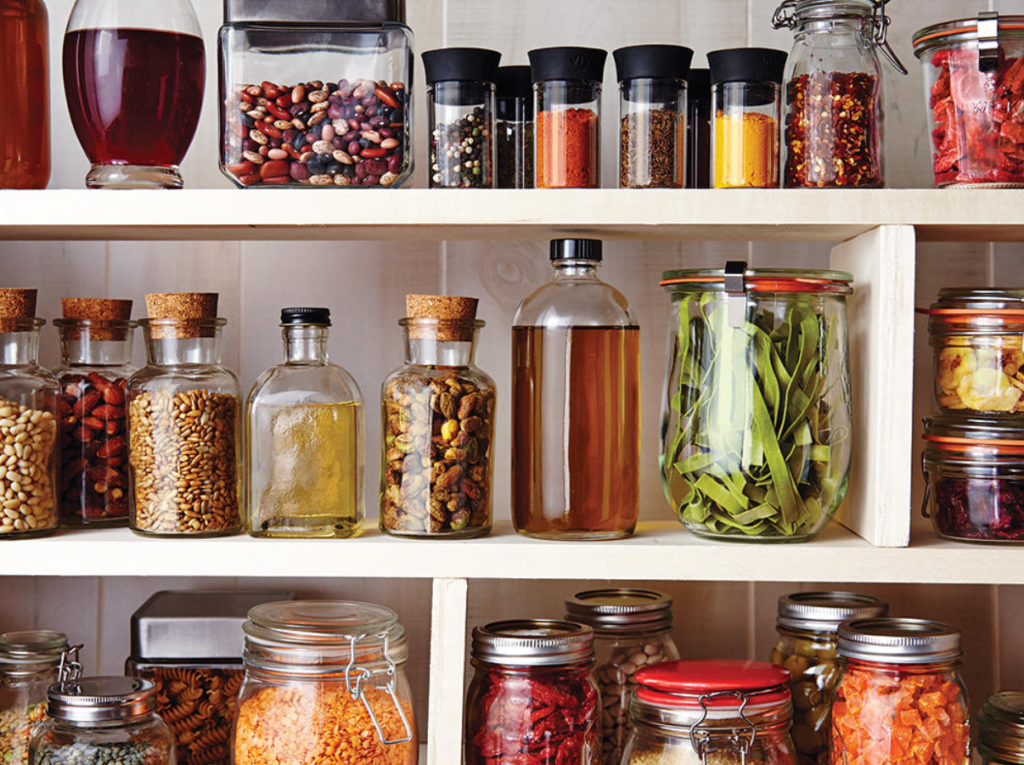
If you’re wondering how you’re going to squeeze all of these essentials into your tiny pantry, consider some pantry organizers. Use an organizer to maximize usable space, for more storage and most importantly: a clean pantry.
Stocking up on pantry staples is a must.
The purpose of a pantry is not just to store food but to preserve it, so it is important that the pantry is in a dry, cool, dark place because moisture and heat can encourage food to become contaminated. It’s also important to keep perishable items in airtight containers, so make sure you have the right containers to store them before you buy them.
Investing in a set of identical airtight, sturdy and stackable plastic dry goods containers from the same brand in an array of different sizes is a great pantry organization idea to store food more efficiently and organize your pantry. To maximize the use of space. You should view them to allow you to quickly see what you have. Square or rectangular shaped containers are most useful for storage and modular sets that can be stored inside each other when not sure are the easiest to consider saving space.
‘By storing items in containers, you can throw out bulky packaging and free up some space. Stackable square containers are the most space efficient,” says Tom Hawley, the kitchen company’s design director.
Start your pantry Essentials list now.
Pantry staples will inevitably vary from home to home, but this list of must-haves should satisfy any home chef. We have divided it into categories for easy digestibility. If you’re passionate about cooking and like to experiment and have fun, you can make it with your star ingredients, like your pomegranate molasses or smoked sea salt.
Oils and vinegars: regular olive oil and extra virgin olive oil, neutral cooking oils (such as canola or rapeseed, grapeseed, sunflower), coconut oil, specialist oils (such as pepper, sesame, truffle), white Wine vinegar, red wine vinegar, apple cider vinegar, balsamic vinegar.
Cans and Jars: Canned fish such as tuna, sardines, mackerel, salmon and anchovies, pickles, capers, olives (black and green), pickles, canned fruit, chicken stock, beef and vegetable stocks.
Tomatoes: Tomato paste, diced, berries and pasta. A true store cupboard staple used in many dishes from curries to Bolognese, canned tomatoes are affordable enough to buy in multipacks so space is a factor in storing them.
Spices and dried herbs: sea salt flakes, fine sea salt, whole black pepper, chili flakes, ground pepper, ground red pepper, sweet paprika, smoked paprika, curry powder, bay leaves, black pepper, ground coriander. Sugar, cinnamon sticks, ground cumin, cloves, cardamom, saffron, ground coriander, garlic powder or granulated garlic, dried thyme, dried oregano.
Grains and pasta: long-grain white rice, brown rice, risotto rice, couscous, quinoa, orzo, spaghetti, lasagna sheets and another type of pasta such as penne, shells or fusilli, plain bread slices, crackers, canned beans such as Chickpeas, haricot and butter beans, black-eyed and split peas, cannellini beans and green lentils.
Cereals: Boxed, branded cereals, muesli, rolled oats, toasted cereal such as corn, wheat or spelt.
Nuts, dried fruits and seeds: walnuts, almonds, hazelnuts, cashews, pecans, dried apricots, dates, figs, sunflower seeds, pumpkin seeds, flax seeds, chia seeds (egg substitutes in baking for)
Preserves and pickles: fruit jams, nut butters, chocolate spreads, chutneys, relishes.
Condiments and Sauces: Vinaigrette, Dijon Mustard, English Mustard, Whole Grain Mustard, American Mustard, Mayonnaise, Tomato Sauce, Hot Sauce, Salsa, Soy Sauce, Worcestershire Sauce.
Vegetables: Garlic, ginger, onions (red and white), shallots, potatoes, dried mushrooms
Dairy: eggs, unsalted butter, cheese (cheddar, jack or Colby, parmesan), milk or cream for cooking (not skim).
Baking: plain flour, self-rising flour, fortified bread flour, whole meal flour, corn flour, ground almonds, flaked almonds, baking soda, baking powder, powdered milk, condensed milk, pure vanilla extract, vanilla. Beans, dry yeast, unsweetened and semi-dark chocolate, cocoa or cocoa powder, raisins, currants or other dried fruit.
Sugars and sweeteners: granulated sugar, caster (regular and golden), light brown sugar, confectioners’ sugar or icing sugar, dark brown sugar, demerara sugar, honey, maple syrup, agave syrup, stevia, or other plant-based sweeteners – It all depends on personal preferences.
Tea and coffee: loose leaf tea, tea bags, ground coffee (or coffee beans if you grind your own beans), instant coffee, powders for hot drinks such as hot chocolate powder, chai powder, etc.
Liquids: Cordials, bottled water, soda water, canned carbonated soft drinks, sealed and unopened dairy milk such as oat, almond, soy, coconut, almond, etc.
Oil and vinegar
- Olive oil – well, duh. This blog wouldn’t be called Love and Olive Oil if we didn’t use a ton of olive oil. We usually keep 3 types of olive oil on hand: an everyday olive oil (we like Trader Joe’s Turkish Olive Oil and California Olive Farm Everyday Olive Oil), a whole olive oil (for dipping and drizzling), and a light or pure olive oil. For frying and baking.
- Vegetable Oil – For frying and roasting, a good neutral oil with a high smoke point is important to have on hand. I personally like sunflower oil, but canola oil, peanut oil, or even grapeseed and/or avocado are other great options (avocado oil actually has one of the highest Smoke!) Grapeseed oil and avocado oil double as good oils. salad dressings and even baking.
- Sesame Oil – For Asian recipes, a few drops of toasted sesame oil works wonders. I recommend storing sesame oil in the fridge to prevent it from going bad (I know I said I’d only include shelf-stable items here but this is the exception).
- Balsamic Vinegar – From a super simple salad dressing to a stand-alone side dish for good bread, balsamic vinegar is easily one of the most used condiments in our kitchen. I’ve also used it to make preserves and desserts! We use a good middle of the road balsamic, not too watery like the cheaper ones but still reasonably priced.
- Cider Vinegar – Perfect for homemade pickles, cider vinegar has more flavor and character than white vinegar (although sometimes I use a blend if I want a clean brine). Also, a favorite natural remedy (if you can stomach it). Look for a good unfiltered cider vinegar like Bragg’s for the best taste and health benefits.
- Red Wine Vinegar – An excellent all-purpose vinegar for salad dressings, sauces and marinades. While they make white wine vinegar and champagne vinegar and sherry vinegar, red wine is definitely the most versatile of the others in my opinion.
- Rice Vinegar – If you cook a lot of Asian food, rice vinegar is a must. Its taste is milder and sweeter than other vinegars. Note that there is a difference between seasoned rice vinegar and rice vinegar, but rice vinegar is the same thing as rice vinegar. While seasonal rice vinegar has added salt/sugar and is more flavorful, we usually stick with a basic unseasoned rice vinegar unless a recipe specifies it.
Baking
- Flour – At a minimum, you should have all-purpose bleached flour in your kitchen at all times. If you have the space, good bread or high-protein flour is good for homemade bread, pizza dough, and pasta. Cake flour is very fine and low in protein and produces a much higher crumb than regular AP. Whole wheat white flour is a great replacement when you want to go a little healthier (I usually mix things 50:50 to avoid making things too dense). Of course, it’s easy to end up with dozens of flours if you really get into it, from specialty grains like rye to extra-fine flours for pizza and pasta. Necessary? maybe not. But God is fun to play with.
- Sugar – Plain white granulated sugar and light brown sugar are essential if you’re doing any amount of baking. Many times, I have run out of sugar and it has completely derailed my weekend baking plans. I have learned to save. While white sugar is easy to buy in bulk, brown sugar will harden to the stone if not stored in an airtight container. If you have room, a good muscovado or dark brown sugar is a tasty addition. Powdered or confectioner’s sugar is also useful for frosting and icing.
- Yeast – I like Red Star Active Dry Yeast, which I buy in large bags and transfer to a mason jar that I store in the freezer. But small packets of active dry or instant yeast are always handy to have on hand (just make sure they haven’t expired before using).
- Vanilla – A good bottle of vanilla extract will add flavor and depth to your desserts. Whether you buy a bottle or make your own, pure vanilla extract/essence is a baker’s best friend (just avoid the imitations, please!) Vanilla bean paste is a lovely ingredient if you have the space (I use it anywhere It calls for a whole vanilla bean.
- Chocolate Chips – Trust me, once you run out of chocolate chips you will have the biggest craving ever for chocolate chip cookies. I usually have a few different varieties including semi-sweet, dark, mini chips and chocolate chunks, but as long as you have a bag of basic semi-sweet chocolate chips, you’re safe in an emergency.
- Baking Chocolate – Chocolate chips are not made to melt. While they will work in a pinch, in situations where melted or tempered chocolate is needed (brownies, truffles, etc.), I recommend keeping baking chocolate on hand, either in bar form, or simply Handling melting discs/chelates/wafers from No need to cut easily. A good quality dark chocolate (60-70%) is incredibly versatile. But if you have the space, you can also play with other percentages or white chocolate.
- Cocoa Powder – I prefer Dutch-processed cocoa; I also had natural but never used it. I buy large 2.2lb bags of Cacao Barry Extra Brute Cocoa Powder. It is my favorite taste wise and quite economical in price.
- Cornstarch – Cornstarch is often used in baking, but is also used to thicken soups and sauces. I like the kind that come in canisters because it’s easy to store and measure without making a big mess. Tapioca starch or potato starch are good alternatives.
- Baking soda and baking powder – pretty much can’t be baked without them! These items have a limited shelf life, so be sure to check expiration dates before use. Be aware that while you can replace baking powder with baking soda (mixed with a little cream of tartar for acidity), you cannot substitute baking powder for baking soda (I’ve been baking for 30+ years and I still can’t keep them. Straight).
- Splash – I mean, oh. It’s a universal truth that rainbow sprinkles make everything better (I personally can’t get enough of the pretty sprinkle mixes from Sweetapolita). But chocolate jimmies are always good to have on hand.
Spices and condiments
- Salt – Salt may be the most important ingredient in all cooking and baking. At the very least, keep a solid supply of kosher salt (I like Diamond Crystal brand kosher salt) on hand, which can be used for cooking, brining, and baking, and doesn’t have anti-caking agents like other brands. Keep a salt cellar full of it next to the stove while you cook in a pinch with ease. If you have the space, a fine flake salt like Malden is great for cooking and sprinkling on desserts, and a fine sea salt is great for popcorn.
- Pepper – Unlike salt, pepper is consistent across the board. I prefer to grind fresh, so I buy large bags of whole peppercorns at my local international market so I don’t always have something to fill the pepper mill with.
- Spices – You can buy whole ‘starter’ sets of spices, but often the pre-assembled sets don’t always include the really useful ones (I mean, who uses marjoram?) Of course, it varies from cook to cook. There would be, but for us, the most commonly used spices in our kitchen include cinnamon, ginger, cumin, smoked paprika, red pepper flakes, and chili powder or cayenne pepper. Secondary spices include nutmeg (whole, preferably), fennel, garlic powder, bay leaf, sesame seeds, and sweet paprika, as well as herbs such as thyme, sage, dill, and oregano (from the garden). The other 62 spices in your drawer/rack? Well, they will expire before you can use the whole jar.
Sweetness
- Honey – Did you know that honey never runs out? Even if it crystallizes, microwave it for just a few seconds to revive it. I try to avoid super cheap honeys because they all seem to taste the same. Once you start trying different varieties, you’ll be amazed at the variety of flavors! My current favorite is Trader Joe’s Turkish Honey, which has a lovely licorice flavor. Local raw honey is said to be great for those with seasonal allergies.
- Maple Syrup – Another alternative sweetener that’s always handy to have on hand, and not just for pancakes. You don’t need the super expensive stuff, just a solid grade B maple syrup is a great choice for baking.
- Corn Syrup – It’s not as bad as you’d believe, and light corn syrup is essential for certain recipes like pecan pie and marshmallows, and helps prevent the boiling sugar from crystallizing. Unless you’re making pecan pie regularly, you probably don’t need the dark. If you want to avoid corn syrup altogether, Lyle’s Golden Syrup is a great alternative.
Canned goods
- Canned Tomatoes – I try to only buy tomatoes when they are in season, which leaves about 9 months of the year when they are not. Then canned tomatoes are a godsend. I usually have a few large cans of whole San Marzano tomatoes (great for tomato and pizza sauces), as well as diced tomatoes and tomato puree (although you can always use whole tomatoes to make your own puree if you need to). (It’s very easy. It’s already been done for you).
- Tomato Paste – In addition to the above, tomato paste is a great base for many sauces and stews, even if the end product is mostly tomatoes. I love the tomato paste tubes that are available now, because they are easy to portion out a tablespoon or two. But a few cans are also helpful for sauces and recipes that call for large quantities. If you have leftover tomato paste, this freezes beautifully.
- Anchovies – Don’t pinch your nose. Anchovies are the secret ingredient in highly flavorful Italian cooking. Add one or two to your oil and garlic before making your pasta sauce and be amazed at how rich the flavor is! Anchovies usually come in cans or jars. Refrigerate after opening or freeze leftovers for longer storage.
- Pumpkin – Sometimes you want pumpkin when it’s not October. For this reason, I always pick up a few extra cans each year to get me through the year.
- Coconut Milk – Quality, full-fat coconut milk is a staple in many Indian and Asian dishes, and is also a great dairy-free alternative to milk in baking. Low-fat coconut milk is thinner and doesn’t separate as much, which can sometimes be helpful. If you can find a product without gums or thickeners, even better (Chao Koh is my favorite brand).
- Broth/Stock – I always try to keep a few cans or cartons of chicken, beef and vegetable stock on hand. I prefer the low-sodium version since I can control my salt in recipes. In general, stocks are richer and more flavorful than broths. Kitchen Basics is a great brand to look for, although I’ve also found Trader Joe’s new stocks to be fantastic.
Rice and Cereals
- Beans – Black beans, garbanzo beans, and white beans are our most used varieties. A few cans are always handy to have on hand for last-minute meals, but I prefer dried beans for flavor and texture (when I have the time and foresight to soak them ahead of time).
- Rice – There are eleven million (give or take) varieties of rice. Depending on what type of food you cook, a basic white jasmine rice (Asian) or basmati rice (Indian/Mexican) are probably the most versatile. A good brown rice, perhaps a glutinous sushi rice (if you want to make your own sushi), and medium arborio rice (for risotto) are also great versatile options.
- Pasta – For those nights when you want a quick dinner without a trip to the store, it’s always a good idea to have a few bags of pasta on hand. I mean, if you have this and some canned tomatoes, you’ve got the easiest dinner in the world.
- Rolled Oats – Old-fashioned (i.e., not quick) oats are great for recipes like homemade granola and oatmeal cookies.
- Quinoa/Farro/Bulgar/Barley – An alternative grain is always on hand, when you don’t feel like pasta but need something hearty and filling as a base. Take your pick, they’re pretty much interchangeable in most recipes.
- Breadcrumbs – From meatballs to chicken tenders, breadcrumbs are functional and flavorful. I prefer panko breadcrumbs in most situations if only for the extra crunch. Regular breadcrumbs always seem extra dry to me. Stick with unseasoned, you can always add more seasoning if you need to.
- Garlic – Being out of garlic is almost as bad as being out of sugar or chocolate chips. Garlic powder is not quite the same. Store garlic in a cool, dark place in a well-ventilated container, basket or mesh bag. They are still usable if they start sprouting (as long as the cloves are not moldy or mushy), but older, sprouted garlic will have a stronger flavor.
- Onions – Like garlic, onions keep very well in a dry, dark environment for months, and are technically still fine to eat if they sprout (although the flavor may have changed). Red onions and yellow onions are the most versatile varieties, though you can’t beat sweet onions for French onion soup.
- Potatoes – Another technically perishable food item that can be stored very well if kept in a cool, dark, dry place in a well-ventilated box or container. Do not place your potatoes close to your onions as they will spoil each other very quickly. Cut off any sprouts or green spots before eating.
Dry goods
Pantry staples include many dry goods that have multiple uses. The key to storing them is to keep them in a dry place or inside containers that prevent moisture.
Breadcrumbs: A binder for meatballs and a topping for casseroles, breadcrumbs are always nice to have around. You can save stale bread and make your own.
Coffee: Besides being a favorite morning drink, coffee is an ingredient in many delicious desserts.
Crackers: As a quick snack, soup additive, or casserole topping, a box of crackers will never go to waste.
Dried fruit: Raisins and apricots are two favorites, although many fruits are available in dried form and are great as a snack or dessert.
Milk: With a carton of powdered milk in the pantry, you can eliminate frequent runs to the store. It’s not great to drink, but it’s perfect for recipes in a pinch.
Nuts: If you like to bake, almonds, peanuts, walnuts, pecans and pine nuts are good to keep around. They also make healthy snacks.
Pasta: Staples like spaghetti, linguini, angel hair, fettuccine, penne, and egg noodles can often be substituted in recipes.
Rice: Although it is used in many recipes, rice also makes a convenient side to any meal. It is inexpensive and most varieties last up to two years.
Storage
Now that you have all of your essentials, you need to organize them so that they all fit in your pantry and are easily accessible when you need them. Entire businesses exist around beautifully organized pantries, but alas, not all of us have that luxury. Still, just moving a lot of your dry goods into great containers makes a world of difference.
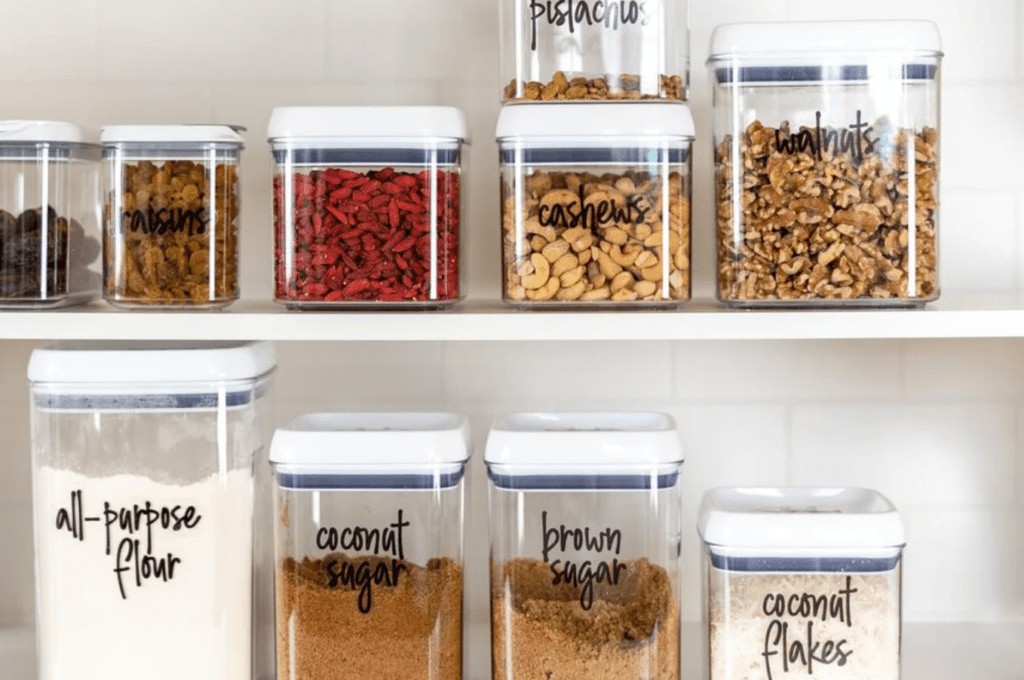
- Pop Containers – For items that could benefit from airtight storage (like brown sugar, for example), OXO’s Pop Containers are one of the best products out there. They come in a variety of sizes that hold everything from spices and seeds to whole bags of flour.
- Glass Jars – If your pantry has an open area, having beautiful storage containers will add a lot of appeal to your space. I took the mismatch route, collecting various glassware and containers over the years. I have random mason jars (some new, some vintage blue jars), some large wok jars, and a bunch of different canisters (most of which I got from World Market). I label my glass containers using chalk markers.
- Organizers – Sometimes just organizing things so you can easily see everything is all there is to it. I mean, if that can of black beans is buried behind a bunch of other stuff, you’ll probably forget you have it, right? A good multi-level can organizer is more practical and attractive than stacking all your cans. Lazy Susan’s are also great items to have in your pantry: I have one dedicated entirely to sprinkles.
- Baskets and Bins – For less attractive items that you might not be able to move into other containers, having some nice uniform baskets or bins can keep your pantry nice and organized. I personally like clear bins so I can see what’s inside, I have a few different sized bins for random things like pasta, chocolate chips and used canning jar lids.
Pantry Staples – Pantry staples
Historically used for food storage, pantries today have evolved into versatile spaces that often include a sink and additional worktop areas for food preparation, as well as additional fridges and freezers. ‘Pantries can also serve a dual purpose as a way to hide appliances. With a greater shift towards keeping work surfaces free of clutter, to give a more minimalist feel and allow for more preparation space, the pantry serves as an excellent solution for concealing appliances,’ ‘ says Tom Hawley (opens in new tab).
If you’re planning a walk-in pantry, we’ve compiled a list of non-food items you’ll want to factor in to free up space in your kitchen.
If you plan to store large appliances or heavy items in the pantry, make sure the shelves can support them. When designing a pantry, ‘the bottom shelf should have the most depth, which is used to store plates, food baskets and more,’ says Richard Moore, design director at Martin Moore (in new tab opens) Bespoke kitchen, ‘shelves should then be low. The deeper you go the higher up you go. It makes everything easily accessible and easily visible.’
Food Processor – Essential for making food preparation easier, a food processor can be used for everything from preparing vegetables to kneading dough.
Stand Mixer – A must for any home baker, stand mixers can come with attachments for beating, kneading and more.
Dutch Oven – The Unsung Hero of the Kitchen This versatile piece of cookware can be used for everything from soups and casseroles to chili. A good quality enameled cast iron Dutch oven with lids is a heavy piece so should be placed on low cupboards or shelves in the pantry or on the counter top.
Slow Cookers – Perfect for making delicious low-maintenance dishes, slow cookers are also useful for batch cooking.
Air Fryer – Acting like a miniature convection oven, this handy device will revolutionize the way you cook, allowing you to create delicious, crispy deep-fried food using a fraction of the oil. Uses a fat fryer.
Serving platters – large and small depending on individual needs.
Large Casserole and Ovenproof Dishes – Cast iron is often cited as one of the best materials.
Cake Stands and Domes – A must-have for home bakers and regular entertainers.
Baking equipment – trays, cake tins, loaf tins, cooling racks.
Table linen – tablecloths, napkins, tea towels.
Alfresco food items – including picnic baskets, cool bags, drinks dispensers, picnicware, crockery and cutlery.
Best practices
Once you have your ingredients, remember that cooking will always cause change and disorder. Cans of tomatoes may never match, spices may never be in matching containers, and your hot sauce collection may always be trying to take over the condiment shelf. But here are some final ideas on how to keep your pantry well-stocked and organized enough to be truly useful.
Organizing Tips
Different styles of cooks require different systems. Some people stock the jam with dried fruit and maple syrup. Others combine it with peanut butter, mustard and mayonnaise. The best logic is your own, and it may take some time to figure it out.
If you can’t see it, you probably won’t use it. Storage space with more shelving is the most efficient arrangement for ingredients. Drawers or slide-out shelves also help greatly with visibility.
Store everything you can in clean containers. Airtight plastics are excellent, and are available in many shapes, sizes and systems. Rectangular shapes make the best use of space.
Keep a roll of painter’s tape and some permanent markers in a kitchen drawer. This will help you create quick labels.
Maximum ingredients
Be realistic about your habits. It’s great to peel and chop a week’s worth of vegetables at once – but if you’re not doing that, buy in smaller quantities.
Buy the least amount of ground spices you can find (except for the spices you use regularly). Certain companies will send about 3 tablespoons, equal to one ounce. You’ll save space and create better, brighter flavors in your food.
Buy fresh herbs. Dried herbs used to be a pantry staple, but most start out with little flavor and lose it quickly in storage. (Some exceptions are dried oregano and dried thyme.) Pick fresh herbs when you need them for a particular recipe; It’s a better investment of money and storage space.
Buy heavy, shelf-stable ingredients like boxed broth and canned tomatoes in bulk. Better yet, order them online to save time and irritation. Almost any delivery service or website will offer a better price on these items than a brick-and-mortar store.
Cooked ingredients are much easier to use than raw. Whether you steam, boil, pan-fry or roast, cook anything in your fridge that looks tired. You can always use it in a salad, cereal bowl or pasta.
Healthy recipes you can make right from your pantry.
We’re willing to bet you have most of these ingredients in your kitchen right now.
Eating from your pantry doesn’t mean your diet consists of chips and granola bars. Healthy pantry staples like ancient grains, canned fish, and beans can make a hearty meal that checks off many nutrients. Whether you’re looking to maximize leftover produce or have protein in the fridge that’s on its last days, adding a shelf-stable product can give these ingredients new life. Here are four healthy pantry meals you can make right now.
Chili Bean and Bulgur Cake
These plant-based patties (pictured above) are made with kidney beans and bulgur, a red wheat that’s high in protein. A spicy chili oil gives them a kick and a rich tomato paste adds flavor. For a hearty vegetarian meal, serve them on a bed of romaine lettuce with lime-spiked sour cream.
Spaghetti with spicy tuna marinara sauce
Canned tuna can go beyond tuna casserole and tuna salad. This spicy pasta dinner is made with canned tuna and dry pasta, both pantry staples. Instead of fresh cherry tomatoes, you can choose canned to make this an almost entirely pantry-based meal.
Lentils with fried eggs
Lentils and fire-roasted tomatoes can serve as a hearty base for this dish. If you have leftover celery after that dinner (or breakfast!), save it for stock. You can even use some of the leftover shallot scraps in this stock. If you have leftover lentils, serve on toast for lunch the next day.
Salmon Cake with Creamy Ginger Sesame Sauce
If you find yourself with slightly dry bread, this salmon cake recipe is the perfect way to use it up. Combine homemade breadcrumbs with canned salmon, herbs, and water chestnuts to make a quick pan-fried salmon cake. Serve on bread with homemade ginger-sesame chutney or with some mayo for a simple lunch.